Goodbye, Smartphone and Pocket PC Magazine

by Ellen
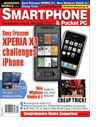
It’s a sad day for Windows Mobile: Smartphone and Pocket PC Magazine have announced that they’re suspending publication as of the last issue in 2008.

The magazine - first called Handheld PC Magazine, then Pocket PC, then Smartphone and Pocket PC, has been around 11 years - just as long as we have. The first issue (Volume 1, Number 0) is dated “Fall 1997”, and if I knew how to work the scanner, I’d show our first ad and give everyone a laugh.

It’s no surprise that the magazine is suspending their Windows Mobile publication. Hal and his staff did an amazing job with it. I saw it in every major bookstore, and every airport magazine counter (I always checked). The articles and art were professional, the content interesting, and the information useful.

But that’s not enough to keep a magazine running. Looking back through my archives, the August issue had 26 advertisers. A random issue from 2004 had 52 and one from 2000 had 37. Microsoft advertised in some of these, not all of them, and the more recent issues had almost no hardware manufacturers, distributors or big companies advertising.

In contrast, the latest issue of MacWorld had 81 advertisers, including big companies like CDW, MacMall, Western Digital and other very recognizable names. Apple’s showing TV commercials specifically about the iPhone App Store and adding over 250 new apps each week.

I don’t understand why Microsoft isn’t doing much more to support the Windows Mobile consumer market - the people who have supported their OS for the last 11 years.

Of course the publishers of Smartphone and Pocket PC are going to try an iPhone publication - who wouldn’t, in those circumstances? I hope they have all the success they deserve with it.


And in one other mobile-media related note, if you’re interested in mobile news and analysis, the four new MediaBistro Mobile sites are doing a great job rounding up info I wouldn’t have found anywhere else. Thanks, guys - you’re making my job a lot easier.

Share this article:


Kudos to Lee!

by Marc

I’m going to risk sounding like we’re patting ourselves on the back here, because I really want to publicly acknowledge the great job Lee is doing. Lee is one of our support folks and has been with us for almost 7 years now. She does a fantastic job of helping people out, and if you ever call here for support it’s very likely that she’s the person you’ll talk to.

The inspiration for this post is a note somone left on tinyapps.org that read:

Ilium Software / eWallet: Best Support on the Planet Lee Stutesman at Ilium Software went WAY above the call of duty today (via toll-free support, no less!) in helping fix our Palm HotSync issue with an ancient version of eWallet . These guys set the standard for shareware support. If Rackspace has “fanatical” support (a fair assesment, BTW), I would call Ilium’s “completely and totally berserk” (in a good way - think “spider monkey on crack all over your tech problem” - there is no way that it is going to go unresolved). Thanks to Lee, I have become a lifetime cheerleader for Ilium.

 So congratulations Lee! And thanks for all your excellent work!

Share this article:


The Trouble With the No Reboot Challenge

by Marc

Let me start by saying I think it’s great that Mike at Mobile Jaw and Chris from GearDiary are doing this. It’s a neat idea and I’m looking forward to the results. At the same time, while I think this idea is interesting, it also has some inherent flaws. Again, I’m not saying their idea is a bad one or that the results won’t be interesting. I just feel that since our app is one of the ones being used in the experiment, and could thus be blamed if the device still crashes, that I need to say a thing or two about this idea.

So if you want to hear my take on device stability and the “No Reboot Challenge”, read on!

So the theory goes something like this:

Instability in the operating system is not a result of bad design by the OS manufacturer but rather a result of badly designed third party applications.

The goal, as I understand it, is to prove that MS gets way too much grief over the instability of its operating systems (mobile and otherwise.) I think this is true and I think proving this is a laudible goal. Unfortunately, I’m not sure that the methodolgy of the Challenge is sound. Not only might it fail to prove the point, but (and this is what worries me) it could wrongfully implicate a developer in the process.

That said, here are the potential problems that I see. I resisted going into specifics (*cough* WM memory management *cough*) because frankly, a lot of this applies to any OS, not just MS products.

Impossible to Prove Unfortunately, it will be impossible to pinpoint the source of instability, even with very few applications installed. A flaw in the OS might only rear its ugly head when an application is installed, not due to any failure on the part of the developer. It could be that the flaw remains hidden until an app is run.

It’s like building a bridge and watching it collapse when the first car goes across. Do you blame the car or its driver for driving across the bridge improperly? I mean, the bridge was working fine until the first car drove over it so it must be the car’s fault, right?

It Isn’t Easy to Screw Up the OS Some will surely disagree, but in my experience it isn’t easy to botch up an operating system accidentally. You’ve got to work really hard to mess up your software so much that the entire OS suffers. Crash your own application? Sure. But screwing up the whole OS is something else entirely.

And let’s be frank about this. The times I’ve seen our applications cause what appeared to be a wide-spread issue (and these were VERY rare and never made it out the door), in the end we discovered that some aspect of the OS was not working as advertised. Perhaps it was a custom method the device had for handling images that failed, an out-dated library, or a missing piece the hardware manufacturer didn’t think was important and cut. In the end, we wrote work arounds to avoid problems with the OS. Had we released the software without addressing this, to anyone on the outside it might have looked like “we broke the OS”, but that simply wasn’t the case.

Failure to Lock-Up the Dogs But let’s say that some application really IS screwing up the OS. Shouldn’t there be some sort of “police officer” built in to protect the user from this sort of thing? Isn’t it the responsibility of the OS manufacturer to provide customers with a stable user experience? If they are giving applications access to portions of the OS that can cause the entire system to perform badly, is that really the sign of a good OS? I’m all for freedom and flexibility for developers, but someone has to be the boss and say “You can ride in the car but you can’t drive it!”

So there you have it folks……my take on the No Reboot Challenge. It’s a cool idea and I hope something cool comes of it, but I’m very concerned about the conclusions folks may come to if things go south.

Share this article:


It's synching! IT'S SYNCHING!

by Marc

IT’S ALIVE SYNCHING! I’ve been responding to the various comments on the other posts, but I just wanted to give everyone a heads up that we are in fact synching with our iPhones and iPod Touch devices here at Ilium Software! We don’t see anything that will stand in the way of our release so watch this blog and your email. As soon as it is out we’ll let everyone know!

And just to offer a little more info - we’re synching LAN, ad-hoc, multiple locations and devices, bootcamp - it’s all working! Woo hoo!

Share this article:


Once More, with Feeling

by Ellen

Save Net Radio I’m going off-topic today because of Pandora.com’s recent’s announcement that they may shut down soon.

mocoNews.net says:

Pandora is “approaching a pull-the-plug kind of decision,” a potential “last stand for webcasting” as royalty fee increases begin to take hold. It’s clear he wants legislative support—and if that can be helped by spurning a coordinated outcry from the company’s million-plus users who listen to Pandora daily so be it.

and The iPhone Blog says:

We might be approaching Pandora’s Last Stand, but let’s make sure they don’t stand alone.

So, yes, let’s make sure they don’t stand alone. Go to SaveNetRadio.org and click the big button that says Call Your Senators and Representatives. Then make the call. If you care about internet radio, this is the time to act.

People who have been reading our blog for a long time know that this isn’t the first time I’ve written about this issue - I feel very strongly about it, enough that I’m breaking our rule about not posting about off-topic topics. But it’s my rule - I can break it. And this is a time when enough voices might make a difference.

So help make noise. Post this info, call or write your representatives in government. Don’t let the music die.

Share this article:


What's Next Windows Mobile?

by Marc

Despite all the iPhone posts around here lately, I’m still a big fan of Windows Mobile. For that reason, I’ve been doing a lot of thinking about what is next for Window Mobile. What sort of plans does Microsoft have for the OS? Are they gearing it for the consumer market? Or are they only interested in enterprise? And what about rumors of a scalable version of the standard desktop OS that would run on a mobile device?

So if you’d like a little insight into the sort of things a software company thinks about as they decide on their future plans…read on!

In recent months Microsoft has been a little bit mysterious about Windows Mobile. (Perhaps they are taking a page from Apple’s book of marketing?) The result is that I’ve spent a fair amount of time puzzling over what the future holds for the Windows Mobile operating system. I do this in part, because I need to keep my finger on the pulse of the industry as I prepare to make decisions about the future direction for our company. The other reason is that, as I mentioned, I like the Windows Mobile OS and I’m just plain curious about it!

That said, here are a few of my musings…

Windows “Enterprise” Mobile: So maybe MS is planning to position themselves as the enterprise platform. I’ve seen quite a few of my friends who work for large corporations coming home with shiney new Windows Mobile devices to replace their BlackBerries. This makes a lot of sense since their desktop products already have a strong foothold in this area and their enterprise mobile solutions seem really strong. And you have to love the flexibility the OS gives you. If you need proof of this, the next time you’re in an Apple store, check out the handhelds the employees are using. They aren’t iPhones! :)

Windows “Touch” Mobile: Or maybe MS wants to go head-to-head with the iPhone as a core consumer device. They certainly offer a compelling alternative to people who want more control over their handheld computing experience. The question, of course, is whether MS can market this. It strikes me that MS has never had the greatest marketing team on the planet. Attempts to make their products “cool” end up looking like John Hodgman wearing a turtle neck and spouting “Hey, dude.”

Windows “Zune Phone” Mobile: I know how people feel about the Zune but MS does have a proven track record at breaking into markets “they don’t belong in.” Look at the XBox. It isn’t impossible that MS could come out with a really strong Zune Phone that offers people a choice. People like to comparison shop. If Microsoft can offer a feature set that is almost as easy to use as iPhone but with the flexibility we’ve come to expect from WM, this might work!

Windows “Mini-Desktop” Mobile: This is one that really has me intrigued. A little while back I read a blog that talked about a plan for the new desktop OS to be scalable. That is to say, the same core OS would function on a variety of device regardless of their hardware. This would be an amazing feat and if MS could pull it off it might be a first step towards a true “everywhere computer.” No more maintaing unique environments with separate software installations and constant compatability issues. Your desktop would be your handheld would be your laptop would be your web app. I’m sure that something like this is in the future, I just wonder if MS might be further along than we know?

So there you have it - my musings on Windows Mobile. Whatever the result, it looks good for us. Our application line up is universal making them equally suited for the enterprise environment or the individual consumer. And scalability is something we’ve been dealing with for the past 11+ years!

So what are your thoughts? Where do you think the Windows Mobile OS is heading?

Share this article:


Search

Archives

Categories

RSS Feed

News