Handheld and Mobile World

eWallet for Mac Update

by Marc

Just a quick update on eWallet for Mac. Contrary to what I’ve seen posted in some of the blog comments, we are in fact making eWallet for Mac. As a matter of fact, we’ve ALWAYS planned to make eWallet for Mac at some point. This is something we’ve had in the works for a few years - pre-iPhone even. If you want to know more about eWallet for Mac, check out the rest of the post after the jump!

Disclaimer: In all of my posts I’ve always been very honest in what I tell you - brutally so at times. That won’t change here. Everything I’m writing in this blog post is a business side analysis. I AM IN NO WAY MAKING A JUDGEMENT ON THE QUALITY OF THE MAC OS. Frankly, it’s an incredible OS. This blog, however, is about the business of making software and not my personal feelings about the quality of an operating system. Mac and Me

Before I get too far into things I want to give you a little history about Mac and Me. Before I graduated from the University of Michigan I’d used two types of computers - Commodores and Macs (OK - I’ll admit, I played Civilization and Doom on Windows towards the end of college but that was it). I was a Mac guy through and through. I owned the top of the line PowerMac and LOVED it. Three things moved me away from Mac. 1st - I couldn’t get software, hardware, or anything else for it. :( 2nd - I used Windows for my work. 3rd - Price. After college I had no money. When the ol’ PowerMac died I moved on to a Windows machine.

And for those who don’t know, even our founders are “Mac People”. Just making clear that decisions about Mac are unrelated to how much we like the OS.

SO, ON TO THE PRESENT DAY….

Why a Mac Version of eWallet and Why Now?

As I mentioned above, we’ve always planned to release eWallet for Mac at some point. The problem was that for a long time the market didn’t support this. Just looking at desktop OS use alone and even today it comes out to something like this:

  • Windows: 91%
  • Mac OS: 8%
Source: http://marketshare.hitslink.com/report.aspx?qprid=8&qptimeframe=M&qpsp=108

Making and maintaining Mac software is no easier than making and maintaining Windows software. At the same time, a Windows product has a potential market more than 10 times that of a Mac product. This is a HUGE difference. Simple math demands that we put our emphasis on Windows. 11+ years down the road that decision has proven a wise one.

But there is even more to it than that. We aren’t a desktop software company. Yes, our desktop software rocks, but our primary focus is Mobile Software. The desktop system used by most Mobile Device users has long been Windows. This further reduced the potential market for a Mac version, since people typically buy our desktop software to add-on to their Mobile experience - and these people used Windows.

So for a VERY long time, Mac just didn’t make good business sense based on our company focus.

Enter, the iPod (thought I was going to say iPhone didn’t you?) Suddenly, huge numbers of people were being introduced to the world of Mac devices. Apple got cool rather than fringe. Next came the iPhone! Now we had a full blown mobile device running Apple software.

So here are the factors that changed the market:

  1. The iPod becomes THE music device. Apple is now everywhere.
  2. The iPhone/Touch took the world by storm - and moved Mac into our area - Mobile Software
  3. The internet becomes one of the most used “applications” cutting the importance of the OS
  4. The latest Macs really CAN run Windows well, offering the “best of both worlds”

Suddenly, the Mac becomes a valid platform (financially) for us to invest in. I see the Mac market share continuing to grow over time, especially as young people who have grown up with white earbuds attached to their skulls go out and buy their first post-college computers. The name recognition alone will drive sales.

But There is a Catch! The Cold Hard Facts…

Look back at those market share numbers I posted. Even though Mac has been around for a long time, from our business perspective it is still an “emerging market.” Mac still commands less than 1/10th the market share that Windows does. No matter how much excitement surrounds the iPhone, we still have to remain realistic about what we will get back on our investment into Mac software.

I mention this due to blog comments saying “why aren’t you throwing everything you have at Mac?” Simple - we’d be completely abandoning the enormous market that pays our bills. Windows is WHY we have the opportunity to make a Mac version. Without Windows and Windows Mobile, we simply couldn’t afford to make a Mac version.

This means that when I sit down and mete out the limited resources available to me, I can’t drop everything to focus on Mac.

Now don’t get me wrong - when we do something, we do it right. Our Mac version is already INCREDIBLY cool. I’m totally geeked about it. And once it is out we plan to support it 100%. I just can’t afford to pull resources from the things that pay the bills to push Mac out faster.

Which Brings Us To the Big Question…When Will It Be Out?

My initial guess was by the end of the year. Now before I go on, I would like to clarify something.

Although it is possible I mispoke at some point (seriously, we aren’t in the business of trying to trick people or mislead them - it’s bad business and goes against our ethics), I always did my best to say “Our hope is that it will be out by the end of the year” and “We are shooting for the end of the year.” I did this because frankly, we don’t do “release dates” (See the other post for more about why release dates and software don’t mix.) As it stands right now, knowing what I know about how long it takes to get things done, I doubt it will be done by year end.

How long until it is ready? Sorry, but I’m not going to try to guess. Recently, my guesses have been interpreted as release dates so I’m going to have to stop doing that. I will say that we have a working version, the UI is coming along, and we actually have people outside Ilium Software using it right now.

Can you show us a screenshot? Nope, sorry. Trade secrets. Seriously, people like to copy our stuff so we seldom reveal it in advance.

 So there you have it. We’re definitely going to release eWallet for Mac, but I’m not sure of the exact release date. You can be assured that as soon is it is ready, though, you’ll hear about it here!

Share this article:


Windows vs iPhone vs BlackBerry vs Palm vs ...

by Marc

Which mobile platform is the best? It’s a war that rages on and on. Vocal supporters of every desktop and mobile platform mount vigorous assaults in defense of their favored system. And yet, I think that’s not the right approach.

Read on after the jump for my take on the debate about “Which Device is the Best?”

This is the first of a series of posts designed to answer a long list of questions folks asked in my last blog post. I started to write it as one post but the thing got so dang long it was getting silly. If I don’t answer your question or address your favored topic today, don’t worry…I’ll get to it over the next couple of days!

Windows VS iPhone VS BlackBerry VS Palm

There is a reason we support a lot of platforms - they all have their advantages. Sure, from the manufacturer’s points of view the platforms are going head to head, but for the consumer we should be asking a different question altogether. I want to start by making a few comments on the big platforms we support.

Windows Mobile: I LOVE, LOVE, LOVE the power of Windows Mobile. It gives me so much freedom that other platforms don’t. Every time I go to a Microsoft event I literally beg them to market the platform better. It is such an excellent solution for so many people, and most of them don’t even know about it!

iPhone: I LOVE my iPhone. I’ve never found a device that was so simple to use. It is limiting in many ways, but it does what it does simply, elegantly, and in a way that is entirely intuitive. Plus, what iPhone has done for mobile software is beyond anything any other platform has done. Look at the latest ad copy for the iPhone - it is ALL about 3rd party software. Bravo!

BlackBerry: I don’t use BlackBerry regularly but the clear focus of this device is beautiful. My friends who use these devices love the hard and fast stability of this platform. And like the iPhone, it knows what it is supposed to do and does it well.

Palm: And Palm? Look, Palm isn’t my favorite platform - I’ll admit - but the bloody OS is still around with no upgrades for YEARS. You can’t argue with that sort of success. It’s a platform that is everything a lot of folks could possibly want. Smooth. Simple. Stable. Straightforward. This is a design that has stood the test of time. I really do hope Palm pulls it out of the fire over the next couple of years because they’ve got a good thing that deserves saving.

It’s the same with desktop platforms. Each has its advantages.

In the end, I don’t think it makes any sense to argue over “the best” operating system. The real question is what is “the best operating system FOR YOU.” We each have our needs and the beauty of the current mobile market is that there is something out there for everyone.

The Software Developer Point of View

As a product manager, it isn’t important to me which platform is “the best”. Each has a role to play in the market and people for whom it is the best option. What really matters to me as Product Manager, is whether or not the platform will sell enough software to provide us with a strong, steady profit over the long term without eating development time we need for a more profitable platform.

Yep, it’s an ugly way of looking at things but if we’re going to support ANY platforms we have to make choices that keep us in business. It doesn’t matter how much we love a particular platform or how passionate a group of people are about their platform. It isn’t a judgement about the quality of the platform - it’s simply a question of making good business decisions so that ten years from now we’re still out there keeping your important information secure.

Coming Tomorrow…

  • eWallet for Mac Update (YES! We ARE making it.)
  • Release Dates

Share this article:


The Last Quiet Week

by Ellen

While we’re all eagerly waiting for Julie’s fun contest next week, and of course for the U.S. election after that, I’ll take this chance share a few mobile-related links:

GoodShop.com - Here’s a great way to support schools and causes you believe in, with no direct cost to you. Click on a link on this page before you buy something on many major sites, including iTunes, Amazon, and eBay, and your kids’ school, or your favorite charity, gets a kickback. With no extra cost to you, some worthy cause can benefit from your purchases.

MediaBistro: Mobile Apps Today - This is one of the most interesting and useful sites I read. It’s got new info every day, and a lot of it is news I don’t find on other sites. For people who want mobile news about apps and platforms, this is a great resource.

Contact Hero - Here’s a new site that lets you manage your contacts online - optimized for mobile devices. Now that mobile’s (finally) so hot, I’m sure this is going to be a big category for popular web apps. This site does a great job of it.

And, finally, for people curious about some of the development issues we mobile developers face, there’s an interesting conversation going on at 4WinMobile.com, about Why Windows Mobile Apps are Falling Behind iPhone Ones. Check it out.

Share this article:


Android - Dream or Nightmare?

by Marc

With the Android G1 officially announced, and a plethora of videos of it sprouting up around the web, I thought I’d take a second to throw in my two cents. I’d also like to hear what your thoughts are as well!

Now naturally, we’re watching Android very close. Any new entry into the mobile market is extremely important to us. Will Android be a major player? Or just another neat idea that never takes off? Will they change the mobile marketplace? Or simply offer more of the same with a new UI?

If you’re interested in my take on this, or would like to throw in your own opinion, read on after the jump!

The Good

Overall, I’d say the G1 is a nice device. Not earth-shattering and not awe inspiring, but not a piece of junk either. They’ve managed to live up to many of the new standards set by the iPhone while not trying to be a clone. I like that they are really embracing their web roots, focusing on web based services as their “thing”. The idea of buying a new phone, clicking a button, and having it setup just like your old one, is very compelling. I think the eWallet Web Companion (which we hope to move into Open Beta later this year - not a promise - just what we’re shooting for) will be an excellent solution for Android that really fits with their overall philosophy.

I also think that openess for developers is a nice approach. It looks like developers will have tons of freedom, particularly in regards to working with other applications on the device. They’ve also offered a number of handy tools that really unlock a lot of power for developers.

The Bad

I am concerned about a couple of things I see. First, as a consumer, the side to side comparison with the iPhone shows a lot of lagchop on the device. This might simply be the result of a demo device, but the iPhone does seem to offer a smoother UI and faster response. And speaking of UI, I’m not altogether impressed with the G1’s presentation. Some of what it does is very modern (finger sliding and that sort of thing), but other things are handled in a relatively old fashioned way. Yes, the old ways work pretty well - just look at Windows Mobile - but now that I’ve used an iPhone I’ve come to believe that it can be done better. For a brand new OS to adopt those old ways up front, rather than finding better ways to do things, seems odd.

One other minor bad thing I saw is that a number of standard services aren’t standard on the phone. For instance - there is no built-in video player. If you want to play videos you have to go out and find a third party application to do the job. It strikes me that this might be a hurdle a lot of folks just won’t even bother with jumping, and they’ll never get to take advantage of the full power of their Android phone.

The Ugly

While I listed openness in the “the Good” section, it also gets a spot down here. Having done this for quite awhile now, I’ve seen a variety of problems come along that it looks like Google is setting themselves up for again. Because the device is 100% open, it looks like anyone can tweak anything. For instance, they said an app could change the font in the email program or add overlays to google maps. This is neat, but if another application is using google maps or the mail program, that program needs to be able to count on certain things remaining constant.

For years, a popular app type for Windows Mobile application was what we call “Interface Altering Software”. This is software that changes how applications display, changes tool/task bars, changes how programs turn on and shut down, etc.. I’ll admit, a lot of these are great, but (especially in the early days and still today) they can outright break other programs. When you make a call to the OS for information, and you get something completely different because another app has changed it, you’ve got problems. The bad part as a developer is that folks call us to find out why our app doesn’t work!

The second ugly thing is the openness for carriers and manufacturers. As I understand it, any of these folks can make any changes they like to the OS before they ship. We saw this happen late in the life of Palm OS. Every single device ran a slightly different version of the OS. The end result was that developing for Palm was like developing for ten operating systems instead of one. This is costly from a development, QA, and support point of view. Unless the platform makes a LOT of money, it quickly becomes too expensive to support.

Finally, we recently heard a rumor that every carrier will design its own revenue sharing plan for application sales. What I’m hearing is “Each carrier has its own store.” This is yet another huge problem from a developer point of view. Multiple contracts. Multiple ways of displaying the apps/screenshots/etc. Multiple reconciliation systems for tracking sales/payment. Potentially multiple places to upload software. Multiple systems of handling customer support issues. When all is said and done, it sounds (on the surface at least) like a perfect recipe for developer headaches.

My Conclusion

I’m not writing the Android off by any stretch of the imagination. Every platform has its problems. With luck, Google will sort through its own challenges, and hopefully the openness will result in more benefits than problems. My gut feeling is that what we are seeing here is the evolution of the “dumb phone.” I don’t mean that in a derogatory way. It just strikes me that what Google has done is to create the perfect next step for folks who are using a Symbian or Linux based phone. Why shouldn’t every phone have robust web access? Why shouldn’t every phone handle music better? Why shouldn’t every phone have mapping software built-in?

It also offers a neat platform for folks who like to tinker with their phone. Beneath the simple (and sometimes rough) exterior is a powerful OS with lots of tools that the tech hobbyist can take advantage of. And it is a great place for hobbyist developers to fire off their latest cool application. These are folks who don’t have to worry about supporting all the different hardware/carrier configurations. This will create a rich and vibrant developer community.

I’m not convinced (yet) that the G1/Android is a “Smartphone” like Windows Mobile, iPhone, or even BlackBerry. I might be proven wrong, but I see it aimed at a very different audience. Either way, I do believe that it will likely do well, at least in the short term, and may be a major part of the mobile landscape in the future.

Share this article:


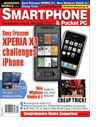
Goodbye, Smartphone and Pocket PC Magazine

by Ellen

It’s a sad day for Windows Mobile: Smartphone and Pocket PC Magazine have announced that they’re suspending publication as of the last issue in 2008.

The magazine - first called Handheld PC Magazine, then Pocket PC, then Smartphone and Pocket PC, has been around 11 years - just as long as we have. The first issue (Volume 1, Number 0) is dated “Fall 1997”, and if I knew how to work the scanner, I’d show our first ad and give everyone a laugh.

It’s no surprise that the magazine is suspending their Windows Mobile publication. Hal and his staff did an amazing job with it. I saw it in every major bookstore, and every airport magazine counter (I always checked). The articles and art were professional, the content interesting, and the information useful.

But that’s not enough to keep a magazine running. Looking back through my archives, the August issue had 26 advertisers. A random issue from 2004 had 52 and one from 2000 had 37. Microsoft advertised in some of these, not all of them, and the more recent issues had almost no hardware manufacturers, distributors or big companies advertising.

In contrast, the latest issue of MacWorld had 81 advertisers, including big companies like CDW, MacMall, Western Digital and other very recognizable names. Apple’s showing TV commercials specifically about the iPhone App Store and adding over 250 new apps each week.

I don’t understand why Microsoft isn’t doing much more to support the Windows Mobile consumer market - the people who have supported their OS for the last 11 years.

Of course the publishers of Smartphone and Pocket PC are going to try an iPhone publication - who wouldn’t, in those circumstances? I hope they have all the success they deserve with it.


And in one other mobile-media related note, if you’re interested in mobile news and analysis, the four new MediaBistro Mobile sites are doing a great job rounding up info I wouldn’t have found anywhere else. Thanks, guys - you’re making my job a lot easier.

Share this article:


The Trouble With the No Reboot Challenge

by Marc

Let me start by saying I think it’s great that Mike at Mobile Jaw and Chris from GearDiary are doing this. It’s a neat idea and I’m looking forward to the results. At the same time, while I think this idea is interesting, it also has some inherent flaws. Again, I’m not saying their idea is a bad one or that the results won’t be interesting. I just feel that since our app is one of the ones being used in the experiment, and could thus be blamed if the device still crashes, that I need to say a thing or two about this idea.

So if you want to hear my take on device stability and the “No Reboot Challenge”, read on!

So the theory goes something like this:

Instability in the operating system is not a result of bad design by the OS manufacturer but rather a result of badly designed third party applications.

The goal, as I understand it, is to prove that MS gets way too much grief over the instability of its operating systems (mobile and otherwise.) I think this is true and I think proving this is a laudible goal. Unfortunately, I’m not sure that the methodolgy of the Challenge is sound. Not only might it fail to prove the point, but (and this is what worries me) it could wrongfully implicate a developer in the process.

That said, here are the potential problems that I see. I resisted going into specifics (*cough* WM memory management *cough*) because frankly, a lot of this applies to any OS, not just MS products.

Impossible to Prove Unfortunately, it will be impossible to pinpoint the source of instability, even with very few applications installed. A flaw in the OS might only rear its ugly head when an application is installed, not due to any failure on the part of the developer. It could be that the flaw remains hidden until an app is run.

It’s like building a bridge and watching it collapse when the first car goes across. Do you blame the car or its driver for driving across the bridge improperly? I mean, the bridge was working fine until the first car drove over it so it must be the car’s fault, right?

It Isn’t Easy to Screw Up the OS Some will surely disagree, but in my experience it isn’t easy to botch up an operating system accidentally. You’ve got to work really hard to mess up your software so much that the entire OS suffers. Crash your own application? Sure. But screwing up the whole OS is something else entirely.

And let’s be frank about this. The times I’ve seen our applications cause what appeared to be a wide-spread issue (and these were VERY rare and never made it out the door), in the end we discovered that some aspect of the OS was not working as advertised. Perhaps it was a custom method the device had for handling images that failed, an out-dated library, or a missing piece the hardware manufacturer didn’t think was important and cut. In the end, we wrote work arounds to avoid problems with the OS. Had we released the software without addressing this, to anyone on the outside it might have looked like “we broke the OS”, but that simply wasn’t the case.

Failure to Lock-Up the Dogs But let’s say that some application really IS screwing up the OS. Shouldn’t there be some sort of “police officer” built in to protect the user from this sort of thing? Isn’t it the responsibility of the OS manufacturer to provide customers with a stable user experience? If they are giving applications access to portions of the OS that can cause the entire system to perform badly, is that really the sign of a good OS? I’m all for freedom and flexibility for developers, but someone has to be the boss and say “You can ride in the car but you can’t drive it!”

So there you have it folks……my take on the No Reboot Challenge. It’s a cool idea and I hope something cool comes of it, but I’m very concerned about the conclusions folks may come to if things go south.

Share this article: